Frequently Asked Questions: Solid Waste Rate Adjustment
Published on February 18, 2026
Why is the City increasing solid waste rates?
The cost of providing solid waste services has risen significantly since rates were last studied in 2020. Labor, disposal, fuel, maintenance, and recycling costs have all increased — the national Garbage & Trash Collection Index is up about 30% since 2020. At current rates, the City is collecting roughly $2.9 million less per year than it needs to fully cover operations and maintain its fleet. Without a rate adjustment, the fund that pays for your trash, recycling, and yard waste services would eventually run out of money.
When will the new rates take effect, and by how much will my bill change?
The first increase will take effect April 1, 2026. A typical residential customer currently pays $23.67/month for their first refuse and recycling cart. Under the plan:
|
Effective Date
|
Monthly Rate
|
Monthly Change
|
|
Current
|
$23.67
|
—
|
|
April 1, 2026
|
$30.42
|
+$6.75
|
|
April 1, 2027
|
$35.17
|
+$4.75
|
|
Oct. 1, 2027
|
$36.23
|
+$1.06
|
|
Oct. 1, 2028
|
$37.31
|
+$1.09
|
|
Oct. 1, 2029
|
$38.43
|
+$1.12
|
The average monthly increase across the full five-year period works out to about $2.95 per month, per year.
Is Dunedin's rate high compared to neighboring communities?
Not at all — even after the approved increase, Dunedin's rate of $30.42 remains below the regional average of $30.69 among comparable Florida cities. Communities like Clearwater ($41.05), Tampa ($38.23), St. Petersburg ($34.22), and Safety Harbor ($33.58) all charge more. The rate keeps Dunedin competitive while covering the true cost of service.
What services does my solid waste rate cover?
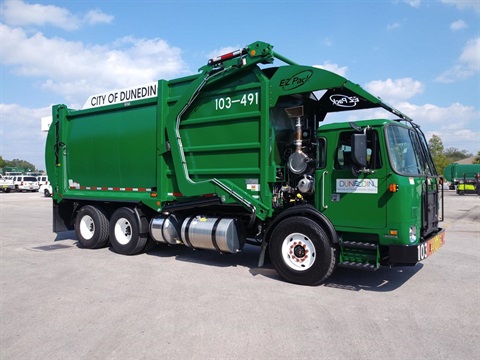
Your monthly solid waste rate applies either to the commercial / multi-family dumpster service or the weekly residential curbside service. The dumpster rate depends on the customer’s dumpster size and how often it's collected each week. The residential curbside rate covers the weekly collection of a trash cart and a recycling cart, both serviced by two separate one-man automated side-arm trucks. It also includes the weekly manual pickups of yard waste and bulk waste, handled by a 3-person crew operating a rear-load truck plus a one-man claw-grapple truck.
Has the City done anything to keep costs down before approving a rate increase?
Yes — finding efficiencies and cost savings has been a priority before any rate increases. The City commissioned an efficiency study that identified meaningful ways to reduce costs. Most notably, in August 2025, the City Commission directed staff to end solid waste service for “unincorporated” customers outside city limits, effective November 2025. Serving those 1,175 outside-city customers required less efficient routes. Ending that service is estimated to generate net lifecycle savings of approximately $2.4 million. The recycling contract was also restructured and separated from administrative contracts for better cost visibility and management.
Why wasn't the 2020 rate study enough to keep the fund healthy?
The 2020 study recommended a modest annual increase, but it didn't anticipate the severity of post-pandemic inflation which resulted in increases across all categories — labor, maintenance, recycling, and disposal. As a result, while revenues came in as projected, expenses outpaced them significantly.
Is the City taking on debt to fund this?
The plan does include financing new vehicles through capital leases (similar to how many local governments fund fleet purchases). Thirteen vehicles are planned between 2026 and 2031, financed over five years at 5% interest. This is standard practice and spreads the cost of major equipment over time rather than requiring residents to absorb large one-time spikes.
Will the rate increases keep the program financially stable long-term?
Yes. The financial plan projects that the proposed rate schedule will cover all operating costs, debt service, and capital needs while maintaining the City's required cash reserve — set at 15% of operating expenditures — throughout the ten-year forecast period through FY 2030 and beyond.
Who conducted this study?
The study was conducted by Raftelis, a national public sector financial consulting firm. The analysis was presented to City leadership on December 2, 2025, and the rate proposal went before the City Commission for a first reading on February 19, 2026. It was approved by the City Commission on March 18, 2026.
Where can I learn more or share my feedback?
Residents are encouraged to contact the City directly with questions at Solidwaste@dunedin.gov